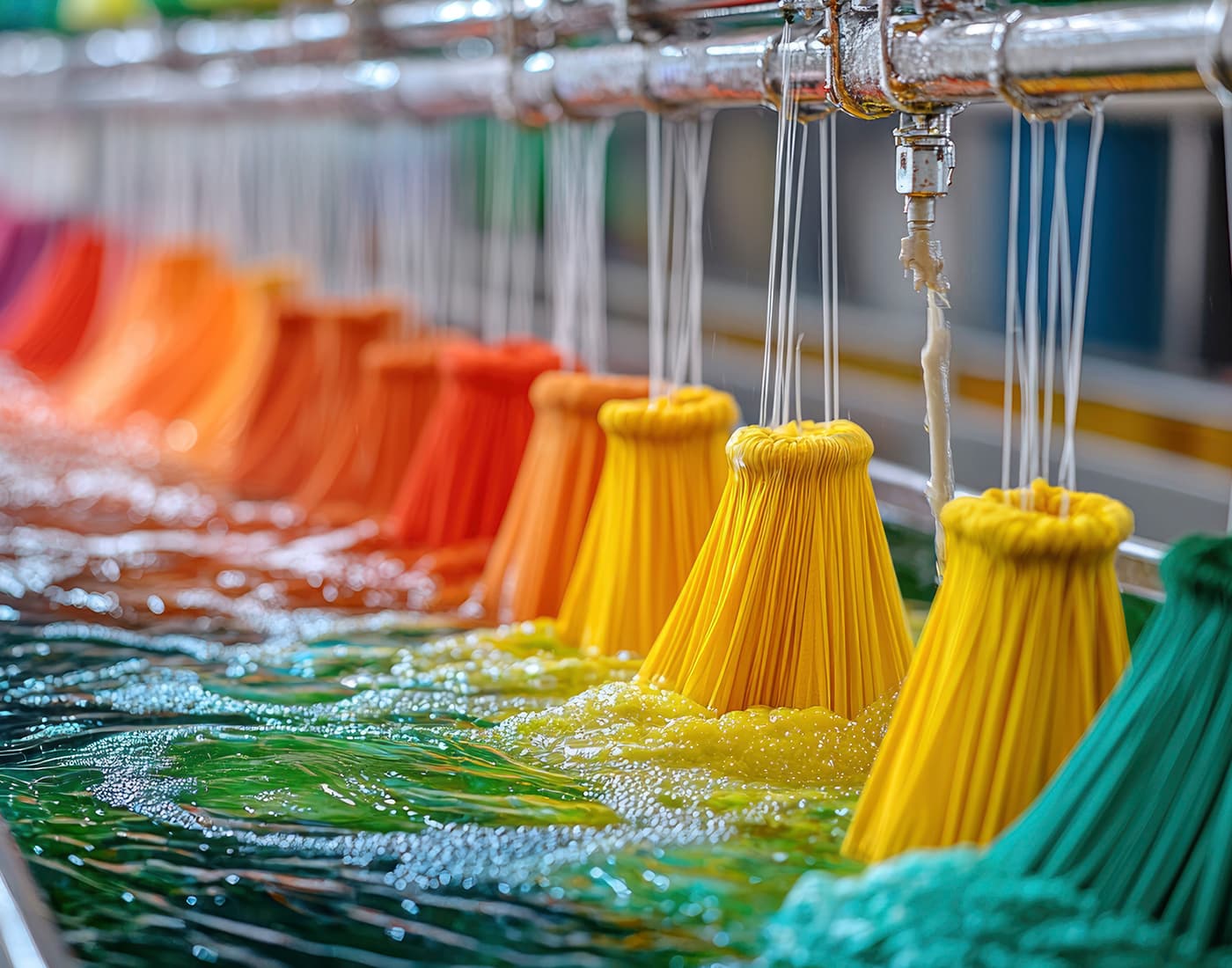
Wastewater from textile dyeing and leather processing plants often contains fibers, dyes, and organic additives. Due to its poor fluidity, it easily causes clogging in pipelines and treatment systems, increasing the difficulty of wastewater management.
Pain Point Analysis:
- High fiber and dye concentrations: Make suspended solids difficult to treat effectively.
- High color and COD levels: Poor treatment performance can easily lead to non-compliance with discharge standards.
- Frequent equipment maintenance: Filters and pipelines require regular cleaning, resulting in increased downtime.
Application Advantages:
1. Powerful separation of fibers and dyes
High separation efficiency reduces pump and pipeline blockages, significantly improving overall treatment performance.
2. Energy-saving and low maintenance
The system requires no frequent backwashing, greatly minimizing maintenance efforts and downtime costs.
3. Enhanced overall treatment quality and stability
Improves the efficiency of wastewater pretreatment in dyeing and tanning plants, ensuring more stable performance in subsequent treatment stages.