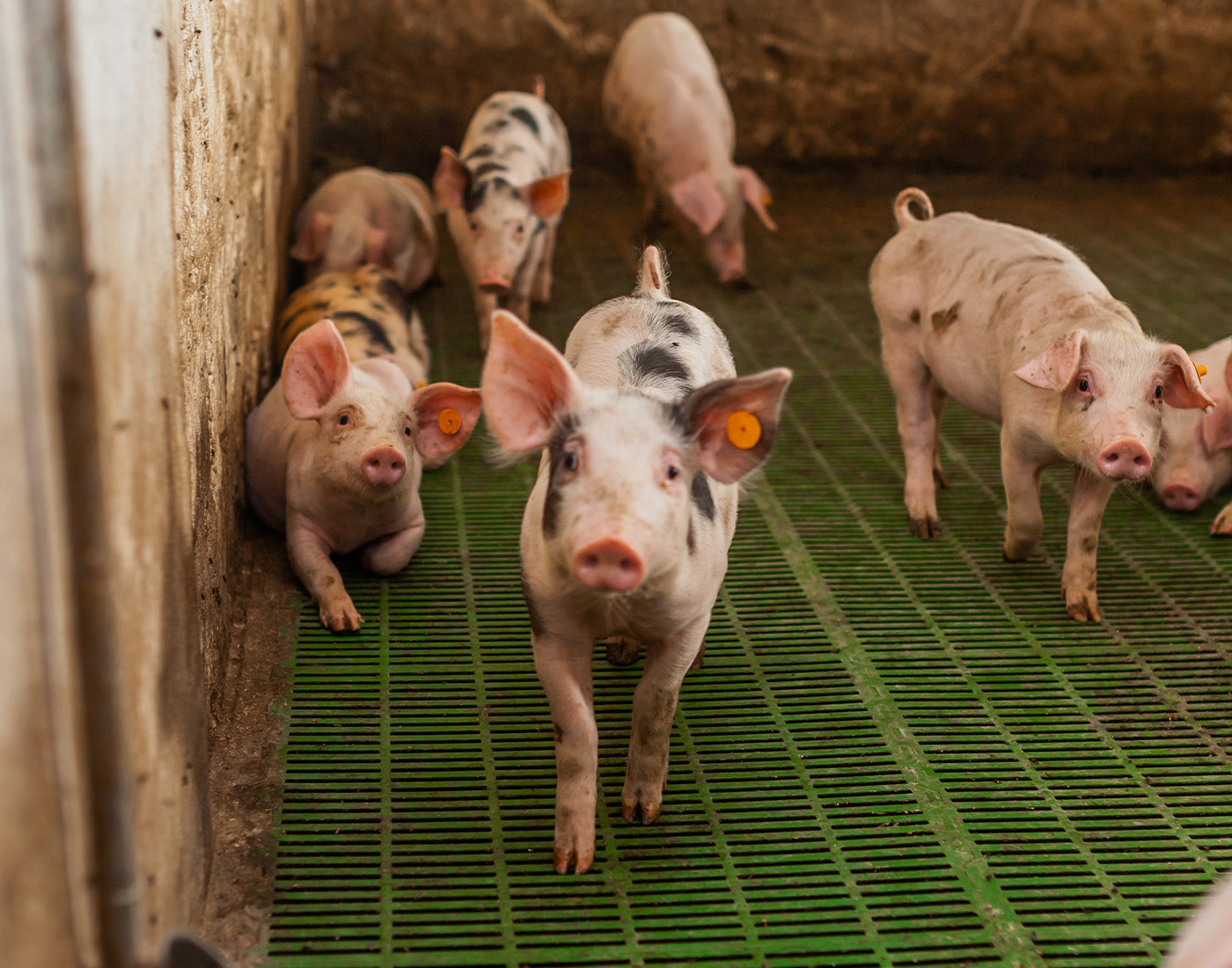
In the livestock industry, pig farms, cattle farms, and poultry houses generate large amounts of highly moisture-rich and organic waste and wastewater every day. If not properly treated, these wastes can easily cause strong odors, groundwater contamination, and significant environmental and community impacts. GREENCARRY’s Wave Separator is specifically designed to address these challenges, offering an efficient, safe, and low-maintenance solid-liquid separation solution.
Key Challenges Addressed:
- High moisture content difficult to dewater: Traditional methods such as natural sedimentation, conventional screening, or centrifugation are often time-consuming and yield inconsistent results.
- Environmental pollution concerns: Improperly treated waste emits unpleasant odors, affecting the living quality of nearby communities.
- Regulatory pressure: Environmental regulations require wastewater to meet discharge standards. Failure to comply may result in fines or mandatory corrective actions.
Advantages of the Wave Separator:
- High-efficiency concentration — reduces moisture content
The Wave Separator uses a slow-rotating elliptical disc and slit filtration design to stably reduce moisture content from over 90% to approximately 2–7%, without damaging solid structures. This significantly reduces downstream processing workload. - Low energy consumption and reduced maintenance cost
The system operates with low power, requires no frequent backwashing, and features a self-cleaning mechanism. It is easy to operate and has low failure rates. - Compact and highly adaptable
The compact design fits well in limited farm spaces and supports modular deployment, allowing flexible expansion and easy integration with existing treatment processes. - Gentle treatment — ideal for fragile organic solids
The elliptical rotation provides smooth movement, offering excellent protection for fibrous or fragile solids and preventing clogging or damage to filter structures. - Enhances resource recovery value
The concentrated manure becomes more suitable as feedstock for biogas fermentation or can be dried for use as organic fertilizer. This not only reduces wastewater disposal costs but also creates circular economic benefits for farm owners.
FAQ :
1. Can pig farm wastewater and sludge be reused?
Absolutely. Today, it is widely recognized that pig manure and urine are valuable resources, not waste. After proper treatment, the reclaimed water and sludge can be returned to farmland as natural fertilizers and nutrient sources for crops. This approach helps save costs, reduce labor, and promote vigorous crop growth — achieving both environmental and economic benefits.
2. Why is sludge treatment so important in pig farms?
Sludge is a key factor in the wastewater treatment process. Many pig farms struggle with how to properly handle and dispose of it, resulting in unstable operations. However, sludge contains rich organic nutrients that can be reused to enhance both livestock and industrial wastewater treatment efficiency, while also supporting green energy generation and carbon reduction efforts.
3. What is the typical wastewater treatment process in a pig farm?
The typical pig farm wastewater treatment process includes three main stages:
- Solid-liquid separation – removes most solid particles.
- Anaerobic tank (10 days) – conducts anaerobic fermentation to decompose organic matter.
- Aeration tank (1.5 days) – performs aerobic treatment, followed by sedimentation and discharge.
To ensure system stability, equalization tanks are often installed before and after the anaerobic stage to balance flow and microbial conditions.
4. What happens if sludge is not properly managed?
If sludge accumulates for too long, it can cause:
- Deterioration of effluent quality and failure to meet environmental standards.
- Reduced effective volume and shortened hydraulic retention time.
- Decline in overall treatment performance and higher operating costs.
Regular sludge discharge is essential to maintain stable system performance.
5. How is sludge discharged and thickened?
- Design a sloped tank bottom to allow sludge to slide into a collection channel.
- Use sludge valves and pumps to discharge the sludge.
- Transfer it to a sludge thickening tank for volume reduction.
The benefits of sludge thickening include: - Reducing sludge volume by around 20% making handling easier
- Facilitating stabilization, sanitation, and reuse.
6. What are the common methods for sludge disposal or reuse?
The three main sludge management methods are:
- Sludge drying beds
- Sludge dewatering systems
- Reusing sludge as a soil conditioner for agriculture
Together, these ensure that the treated effluent can be safely used for irrigation, achieving a complete resource-recycling loop back to the land.
7. How much water is used and discharged during pig slaughtering?
Each slaughtered pig requires approximately 1–2 tons of water, equivalent to 15–30 liters of wastewater per kilogram of pork.
This wastewater contains blood, feces, and meat residues, making it highly concentrated with organic matter.
Without proper treatment, discharging it directly can cause severe river and environmental pollution.
Video: https://youtu.be/emP7O2hUCy8
Example:
GREENCARRY’s Wave Separator demonstrates outstanding performance in livestock manure treatment facilities, achieving stable and efficient concentration with minimal operating costs. It ensures significant energy savings and enhanced processing efficiency in livestock operations.